Disclaimer
What this project is, what it isn't, and how to approach it honestly.
Ritual Status
Responsibility for commissioning the print, installing the flag, and conducting practice with it sits with the buyer. See What You Get for the full description of what arrives with each piece.
The flags in this collection are not temple-consecrated objects. No monk has blessed them. No ajarn has formally empowered them. No mantras were chanted during their creation.
In the saiyasart tradition, the consecration of a ritual object happens through a specific ceremony — chanted katha that introduces the 32 elements of the body and brings the object "to life." That ceremony has not been performed on these flags.
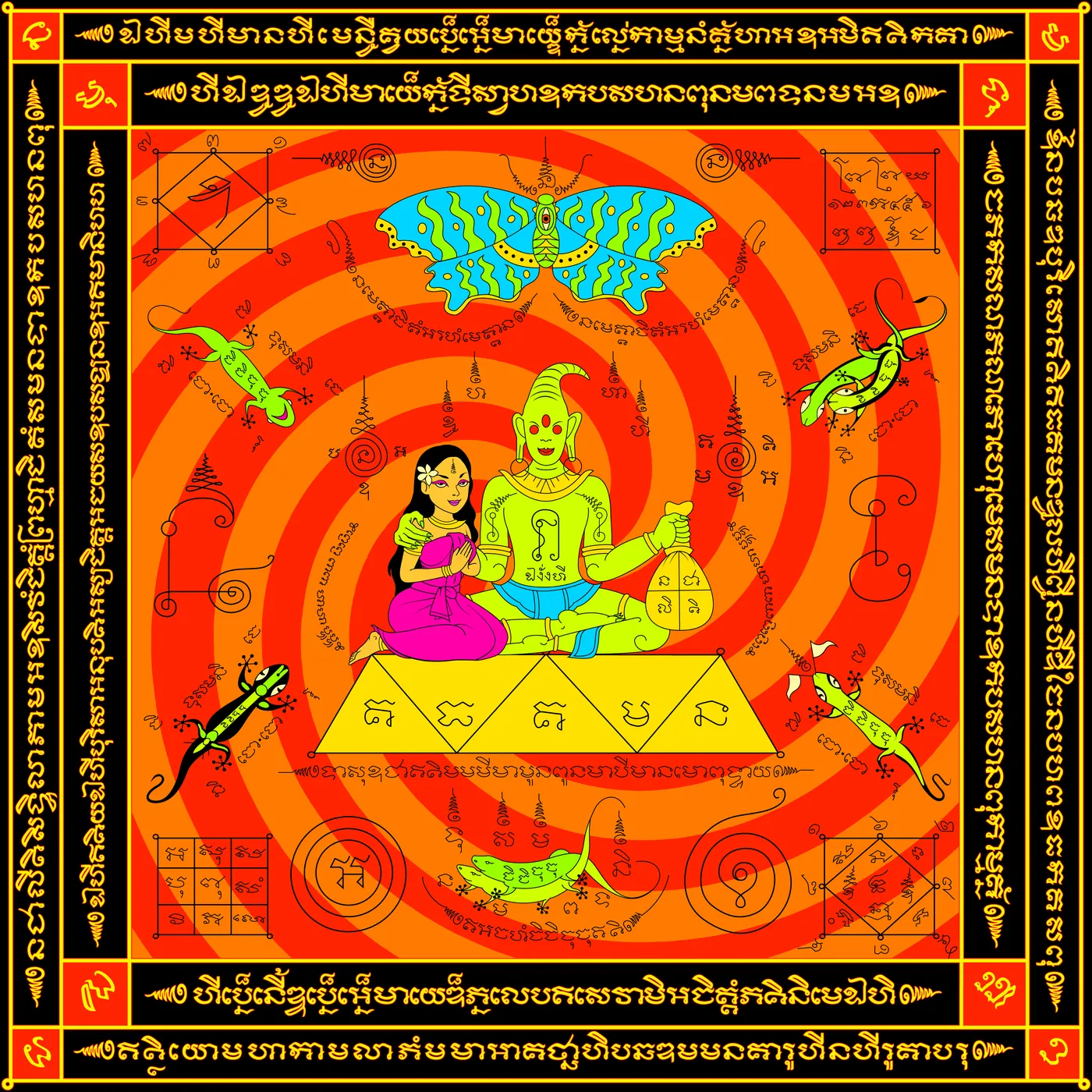
What they are is correctly made — built according to the actual structural rules of the tradition, with accurate script, authentic yantra geometry, and symbolic elements reviewed by a practicing ajarn. In saiyasart, construction according to the genuine grammar of the tradition is itself meaningful. These are not objects that merely resemble ritual diagrams — they are constructed according to the genuine grammar of ritual diagrams. Whether any given flag becomes a working ritual object is a matter of the relationship its bearer cultivates with it, in the tradition's own terms. What I offer is devotional art: correct in detail and meaning, but not ritually consecrated. The rest is yours.
This is more than decoration but less than a working ritual instrument. Think of it as a weapon that has been correctly forged but not yet sharpened or charged — the construction is sound, but critical steps remain before it could be used in the way the tradition intends.
I cannot claim this artwork will function as a channel that allows Phra Ngang to enter your life. I equally cannot guarantee that it will not. Be aware of what you are purchasing.
The Artist's Vow
This project is the fulfillment of a personal vow made to Phra Ngang. The channel was open. He wanted this to exist. Much of its imagery and conceptual architecture emerged through years of intensive study, meditative practice, and direct experience with this spirit.
The artist is not a monk, an ajarn, or an initiated ritual specialist. No formal lineage transmission is being claimed or offered. What is being offered is serious work, made in sincere devotion, by Lung Farang Ngong (ลุงฝรั่งงง) — who has spent ten years in relationship with this spirit and knows the difference between engagement and performance.
Home Practice
Don't pray to the flag.
That sounds like a strange instruction for a devotional artifact, but it follows directly from what consecration actually does in the saiyasart tradition. A monk or ajarn doesn't only confirm that the spirit has agreed to inhabit the object — they also set boundaries on what the spirit can and cannot do through it. Those boundaries are the safety. Without that ritual, picking up the phone is open-ended: there's always a possibility that something else could come through, maybe with its own agenda.
So treat the flag as devotional art. Don't address it in prayer. Don't make offerings directly to it. Don't ask it for anything.
But don't disrespect it either. Don't throw it on the floor. Don't put it in the bathroom. The figure depicted is sacred even if the object isn't ritually activated. Think of it like a devotional painting in a home: a thing of reverence, not a working ritual instrument.
If you want to work with Phra Ngang's energy directly, get a consecrated piece — an amulet or small statue from a monk or ajarn. The flag can hang above your shrine as a visual anchor. See Working for the full practice guide.
No initiation is transmitted through ownership of this object. What you build from here is your own practice, your own relationship, your own responsibility.
No Guaranteed Outcomes
No outcomes are promised. No effects are guaranteed.
This is not a hedge. It is the honest position of the tradition itself. Saiyasart has never offered certainty — only tools, containers, and the quality of attention you bring to them. Anyone who tells you otherwise is selling something the tradition has never claimed to provide.
Merit
If you feel moved to generate additional merit beyond the percentage built into every purchase, give where it matters to you. Generosity does not require a middleman. The tradition has always understood this.
Cultural Respect
Southeast Asian magical traditions are living systems with deep regional variation and centuries of accumulated knowledge. This project does not claim to define, represent, or speak for those traditions in their entirety.
The Codex was built with respect for that complexity — through direct consultation with practitioners, formal study of the tradition's internal logic, and genuine devotion to the figure at its center. It exists at the intersection of devotional practice, living visual tradition, and contemporary form.
It is not a museum piece. It is not a costume. It is a serious attempt to participate in a tradition that has always absorbed new influences and made them its own.
Your Own Judgment
Practice discernment. Take responsibility for your own spiritual and magical activities. Nothing here replaces your own lineage teachers, established practice, or considered judgment.
Phra Ngang rewards sincerity and tends to make things interesting for everyone else. Proceed accordingly.